








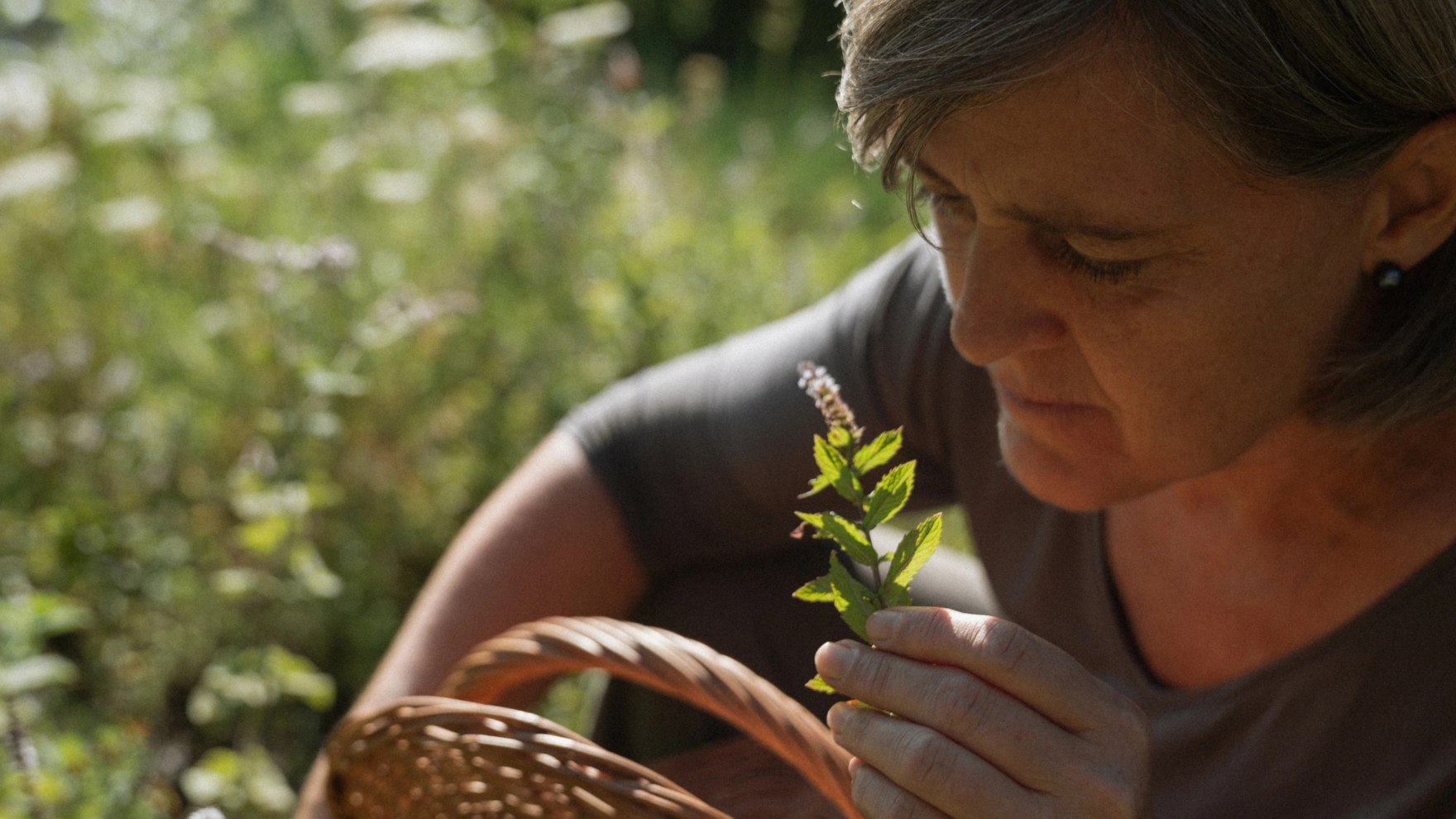
Our herbal expert Herta often shares valuable knowledge about native plants and their traditional uses during her walks. What makes her approach especially appealing is that her recipes are simple, practical, and easy to integrate into everyday life, even without extensive herbal experience.
When foraging, however, it is always essential to know exactly which plant you are dealing with in order to avoid confusion with similar-looking species. The nettle, with its distinctive serrated leaves and stinging hairs, is easy to identify and therefore a great entry point into the world of wild herbs. Today we are sharing some of Herta’s simple nettle ideas for everyday use.
The nettle is probably one of the less appreciated wild plants, as most of us have experienced its stinging nature at some point. It is even said that this is its way of protecting itself from overuse. Yet it holds remarkable inner strength: it is truly nutrient-dense, rich in vitamins, minerals, trace elements, and iron, to mention just a few of its valuable properties.
NETTLE CHIPS
For crispy nettle chips, it is best to use young leaves and gently remove them from the stems. Rinse quickly, pat dry thoroughly, and spread them out on a baking tray. If you like, you can season them with a little oil and spices such as salt, paprika, or garlic. However, this is not necessary, as nettle already has a pleasantly aromatic, green flavour.
Bake the leaves at around 150°C for about 15 minutes, until crisp. The finished chips make a delicious crunchy snack on their own, but also work wonderfully as a topping for salads, soups, or bowls.
NETTLE JUICE CURE
For a fresh nettle juice, young nettle leaves are first washed and then soaked in cold water for about 15 minutes. Afterwards, the leaves are blended together with the water until smooth and strained through a cloth or fine sieve. This produces a deep green nettle juice. Traditionally, it is used as a cleansing spring tonic, especially in early spring. Over a period of two to three weeks, a small shot glass can be consumed daily, followed by a break. Herta values this cure as a refreshing, revitalising, mineral-rich detox to support the transition into the warmer season.
NETTLE SEEDS
In late summer and early autumn, female nettle plants develop their characteristic long seed clusters. These can be easily stripped from the plant or carefully plucked. After harvesting, the seeds can be used fresh or dried. For drying, a well-ventilated, shaded place is ideal. They make an excellent topping for muesli, yoghurt, or salads, adding a slightly nutty flavour. The seeds are highly nutrient-dense and contain a high amount of protein, as well as valuable fatty acids and minerals. They are often referred to as a native superfood, comparable to chia seeds.
PS: If you grasp the nettle leaf firmly at the base of the stem from both sides, as Herta says, “with courage,” and pull it off cleanly, it won’t sting. Then fold the leaf in the middle and gently brush out the fine stinging hairs on the underside of the leaf, almost as if “taming” them. After that, roll the leaf up, knead it well, and eat it straight away.